A teething puppy will chew whatever is in reach, and the toys you put in front of it during those first six months do two jobs at once: they steer that chewing away from your furniture, and they protect a mouth that is still under construction. The toy that is right for a four-month-old is not the same as the one you would hand a strong-jawed adult, and getting the difference wrong is how puppies end up with cracked teeth or a trip to the vet for a swallowed piece.
What teething actually is
Puppies are born toothless. A full set of 28 baby teeth pushes through between roughly two and eight weeks of age, and then the whole set is replaced. Starting around three to four months, those baby teeth loosen and fall out as 42 permanent teeth erupt underneath them, a process most puppies finish by about six months. In other words, a puppy’s mouth is remodeled twice before its first half-year is out, and the sorest stretch is the overlap when adult teeth are pushing through.
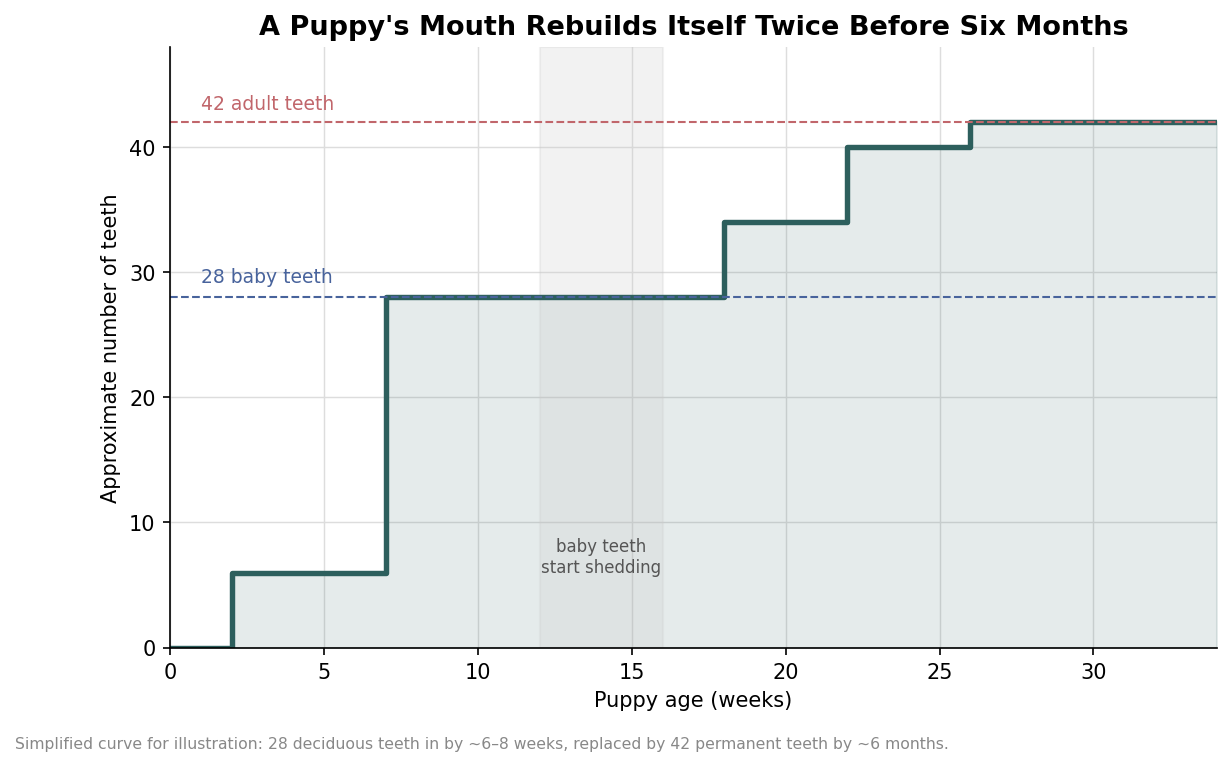
The different tooth groups do not all arrive at once, which is why chewing intensity comes in waves rather than a single peak. The incisors and canines tend to come through first, the premolars a little later, and the molars last.
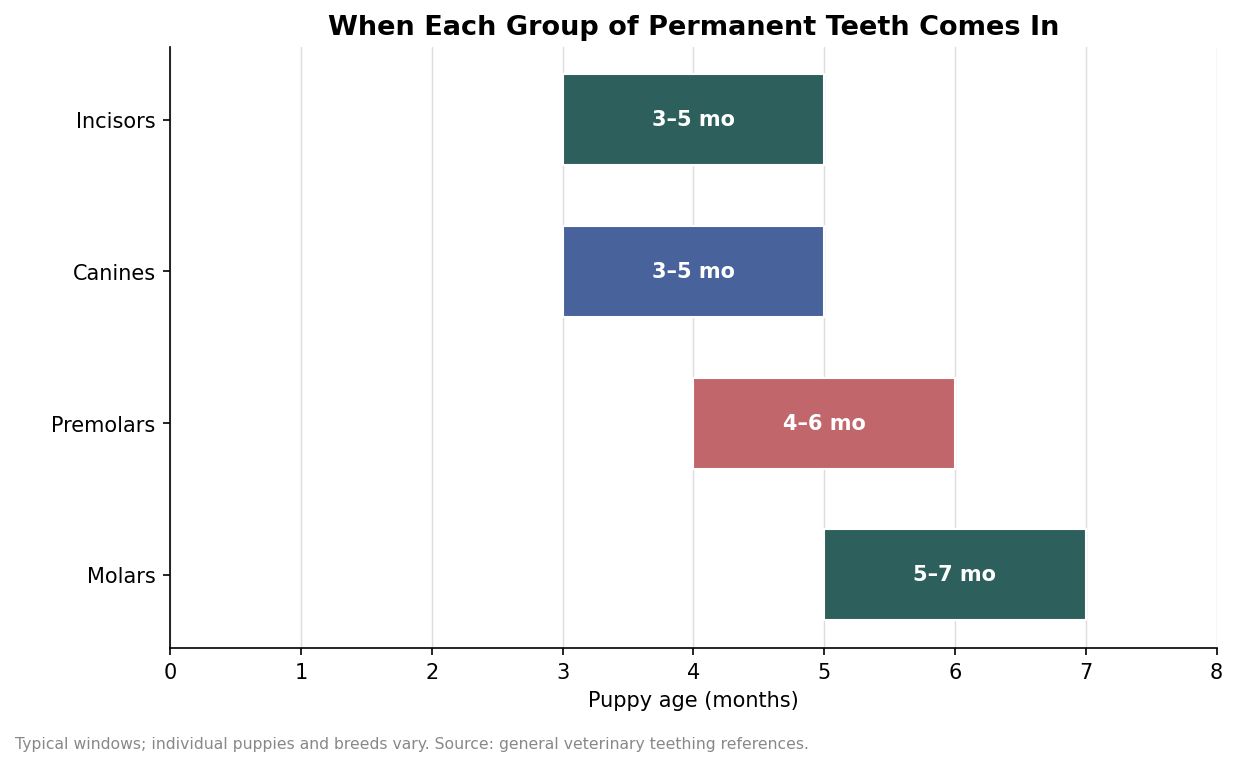
Knowing roughly where your puppy sits on this timeline helps you read its behavior. A sudden jump in chewing, a bit of blood on a toy, or a small tooth found on the floor are all normal signs of the permanent set arriving, not signs that anything is wrong.
The hardness rule that matters most
The single most useful test is the thumbnail test: press your thumbnail into the toy, and if the surface does not give at all, it is too hard for a puppy. Developing teeth fracture far more easily than adult teeth, and the usual culprits are exactly the items marketed as long-lasting chews—real bones, antlers, hooves, and the dense nylon toys built for adult power chewers. None of those belong with a teething puppy, however durable they sound, because the same hardness that makes them last is what cracks a young tooth.
What you want instead is something with a little flex: softer rubber that yields under a thumbnail, rope toys for gentle pulling, and rubber toys with a hollow center you can stuff. A genuinely effective trick for sore gums is cold. Smear a little wet food or peanut butter inside a rubber toy, freeze it, and hand it over—the chill soothes inflamed gums while the filling keeps the puppy working at it, which buys you a quiet twenty minutes and spares a chair leg.
Sizing, supervision, and what to throw away
After hardness, size is the thing that sends puppies to the emergency vet. A toy should be clearly too big to fit entirely in the puppy’s mouth, because anything that can be worked to the back of the throat is a choking risk, and puppies are relentless about working at things. Err larger than you think you need, and step up toy sizes as the puppy grows rather than assuming last month’s toy still fits.
Supervision is not optional during this stage. Puppies swallow squeakers, tear the fabric off plush toys, and gnaw rope until strands come loose, and any of those can lodge in a digestive tract that is smaller and less forgiving than an adult dog’s. Check toys over regularly, and retire anything that has started to shed pieces, split at a seam, or shrink small enough to swallow. A toy that was perfect two months ago can quietly become a hazard. A simple habit that prevents most trouble is a quick weekly look through the toy basket, tossing anything cracked, frayed, or worn down, so the collection the puppy plays with is always one you have actually checked.
It also helps to keep more toys in rotation than the puppy has access to at any one time. Put three or four out, cycle the rest away for a week, and swap them—a toy that has been out of sight reads as new again, which keeps a bored puppy engaged with its own things instead of testing the baseboards. When you do catch the puppy chewing something off-limits, the fix is to trade rather than scold: calmly take the forbidden item, hand over an approved toy, and praise the switch, so the puppy learns where its teeth are welcome.
If you are ordering custom or branded puppy toys
Businesses that hand out toys—breeders sending puppies home, vet clinics welcoming new patients, brands building a puppy line—have the same constraints as any owner, plus one more. The material has to stay soft enough to pass the thumbnail test even after you add printing or molding, so specify a puppy-appropriate rubber rather than defaulting to the harder compound used for adult chew toys. Keep any printed branding on surfaces the puppy is not meant to gnaw, and size the toy for the smallest animal likely to receive it, not the average, since a giveaway ends up in a lot of different mouths.
Order a sample and put it through the same checks you would use at home before committing to a run. Press a thumbnail into it, look at how the seams and any squeaker are secured, and confirm it is too large for a small puppy to swallow. Those three checks take a minute and are far cheaper to act on with one sample in hand than with a pallet already printed and boxed.