A dog toy only works if it matches the dog. The most beautifully branded plush toy is landfill within an hour in the jaws of a determined Labrador, and the toughest nylon bone is a waste of money and a dental hazard for a gentle senior who just wants something soft to carry. If you are building a custom dog toy line, the smartest thing you can do before choosing colors and logos is decide which dogs each toy is for, and let that drive the material and format. This is a selection guide organized the way buyers actually shop: by how the dog plays and how hard it chews.
Start by classifying the chewer, not the breed
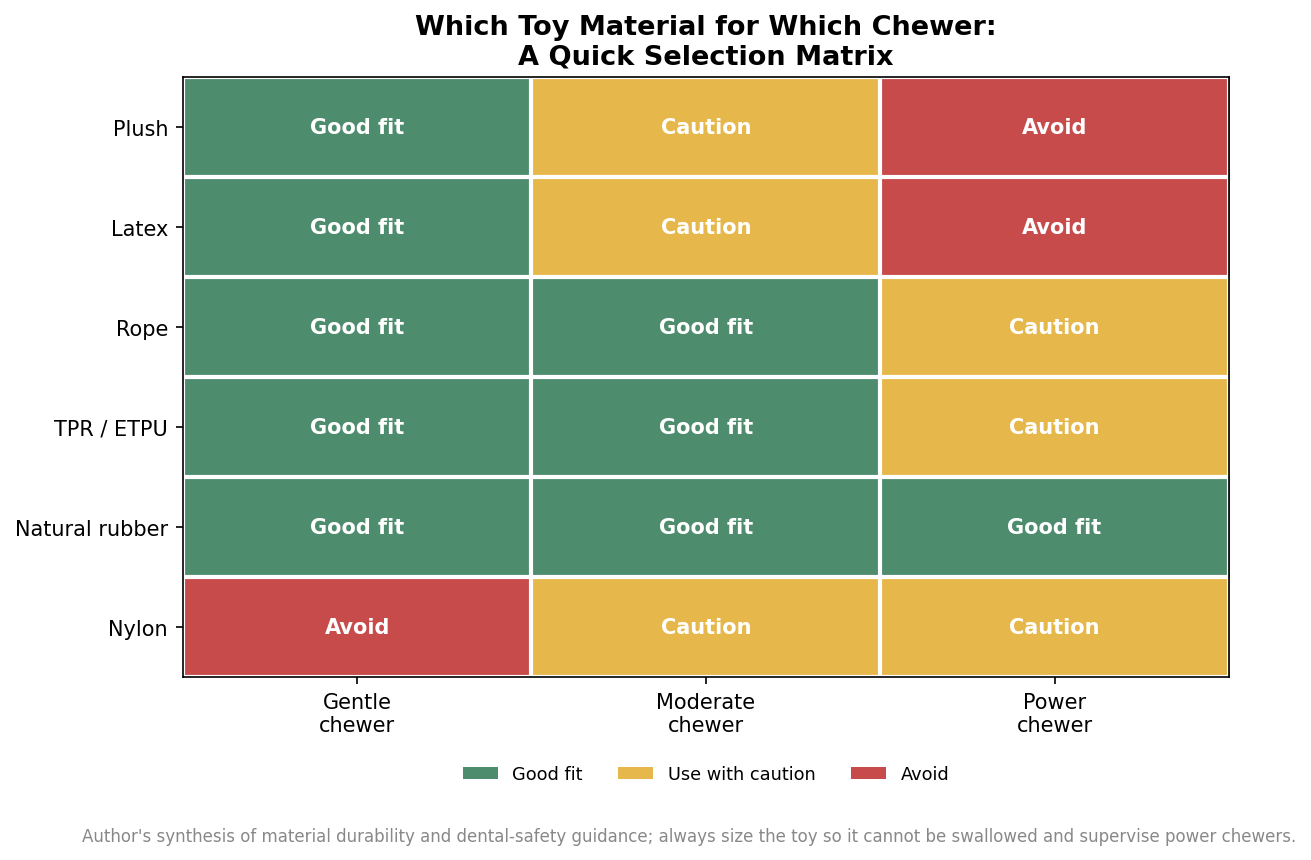
Dogs sort roughly into three chewing intensities, and this matters more than size or breed. Gentle chewers mouth and carry toys without trying to destroy them; they are happy with soft, plush, and squeaky items. Moderate chewers work a toy actively and will find the weak seam, but they are not on a mission to reduce it to fragments. Power chewers, the category most likely to generate an angry review, treat every toy as a problem to be solved with force, and they defeat anything that is not purpose-built. A single household can contain all three, which is why offering a line that spans intensities sells better than a one-size product. Ask buyers to self-identify their dog’s intensity on the product page, because they know it, and it routes them to the right item.
Match the material to the intensity
Materials line up along a durability spectrum, and each has a natural home. Plush and latex sit at the soft end: pleasant, squeaky, and easily destroyed, so they suit gentle chewers and supervised play only, with the real risk being ingested stuffing or a swallowed squeaker. Rope is a moderate-duty material good for tug and some dental benefit, but frayed strands can cause digestive trouble if swallowed, so worn rope toys need retiring. Thermoplastic rubber and expanded thermoplastic polyurethane are flexible, bouncy, and non-toxic, ideal for small-to-medium dogs and chase-and-tug play. Natural rubber is the versatile workhorse: durable enough for medium and heavy chewers, flexible enough to spare teeth, and often designed to be stuffed with treats for enrichment. Nylon is the most durable option and the one aggressive chewers cannot easily destroy, but it is hard, and hardness is a double-edged sword.
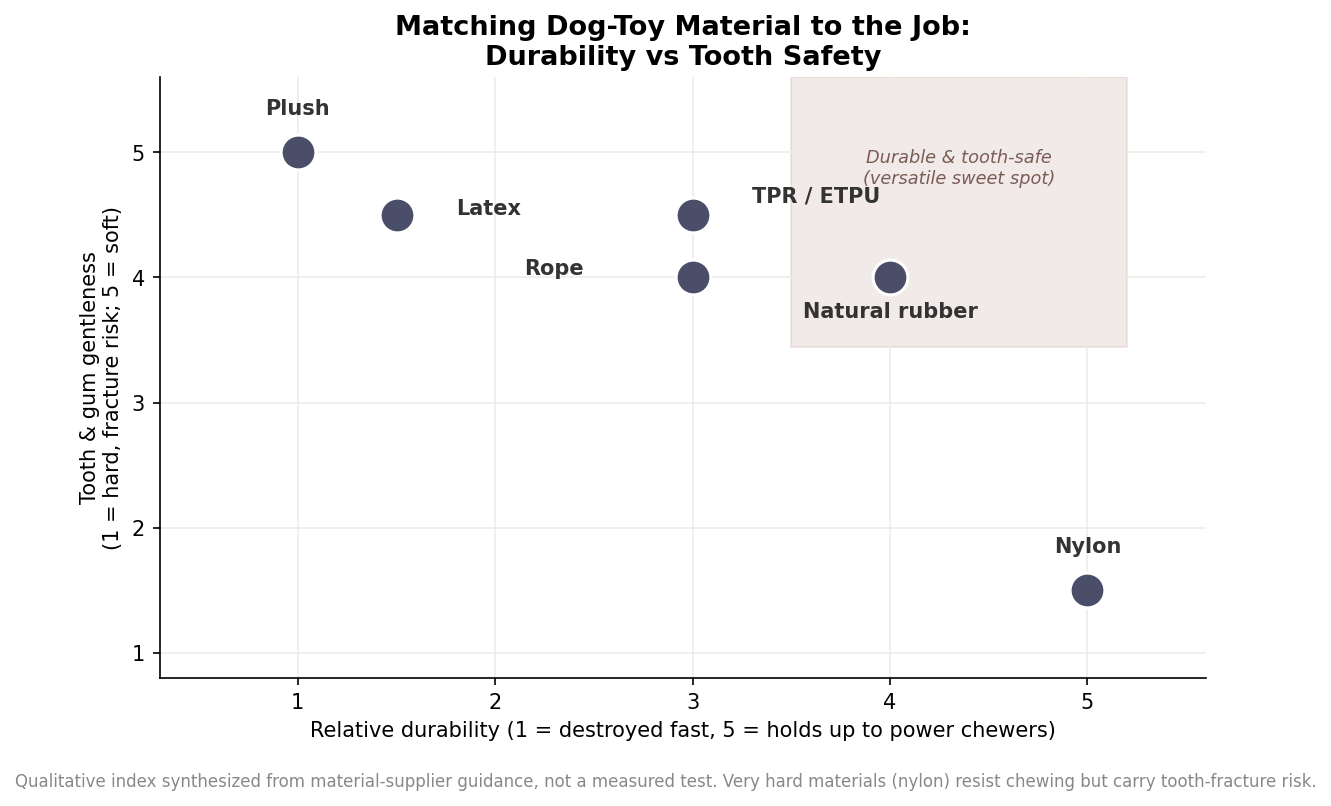
The hardness caution is worth stating plainly. A toy that is too hard to dent with your thumbnail is hard enough to fracture a tooth. Nylon, hard plastic, real bones, and antlers all fall into this zone. They resist chewing precisely because they are unyielding, and that same property transmits force back into the dog’s teeth. For a power chewer you often want the toughest thing available, but you should pair it with guidance to supervise, to choose the right size, and to accept that even nylon wears and needs replacing. Natural rubber earns its reputation as the default recommendation because it lands in the sweet spot: genuinely durable while still having enough give to be kind to teeth and gums.
Then match the format to the play style
Intensity tells you the material; play style tells you the format. Chewers want a chew toy they can settle in with, which points to solid or stuffable rubber and nylon shapes. Retrievers want fetch toys, so balls, rings, and bumpers in bouncy rubber or buoyant foam suit them, sized so they cannot lodge in the throat. Dogs that love a wrestle want tug toys with handles and reinforced stitching, where rope and tough braided fabric shine. And the fastest-growing category, enrichment, wants puzzle and treat-dispensing toys that make the dog work for a reward. Enrichment toys deserve special attention in a modern line because they address boredom and destructive behavior directly, and because treat-dispensing rubber doubles as a durable chew, giving you a single item that serves two needs.
Size and supervision are non-negotiable
Whatever the material, size is the safety spec that prevents the worst outcomes. A toy should be large enough that the dog cannot fit it entirely in its mouth or swallow it, and small enough to grip and carry comfortably. The dangerous middle is a toy that is just small enough to become lodged in the throat, which is a genuine choking and obstruction risk. Size up rather than down when a dog is between sizes, and offer distinct sizes rather than a single medium that fits nothing well. Alongside size, build replacement and supervision into your product messaging: any toy showing fraying, tears, or missing chunks should come out of rotation immediately, and power chewers should be supervised with any toy, because no toy is truly indestructible.
Turn the framework into your product line
Put these pieces together and your catalog almost designs itself. Cover the gentle end with plush and latex squeaky toys aimed at light chewers and puppies. Serve the broad middle with natural rubber chews, rubber fetch balls, and rope tugs that suit most dogs. Anchor the tough end with heavy natural rubber and nylon built for power chewers, sold honestly as durable rather than indestructible and paired with a dental caution. Layer enrichment across the whole range with treat-dispensing and puzzle toys, since those sell to owners of every chewer type. Then apply your branding where it survives, size each item into a real range, and label the intended chewer intensity on every product. A line organized around how dogs actually play, rather than around what looks good in a photo, is the one that earns repeat orders.