Here is a fact that surprises most dog owners: in the United States there is no federal safety standard for pet toys. Children’s toys are tested for lead, choking hazards, and toxic chemicals before they can be sold; the squeaky rubber bone in the same shopping cart faces no such requirement. That gap does not make every dog toy dangerous, but it does shift the responsibility onto the buyer to read materials, sizing, and construction the way a regulator otherwise would. This guide walks through what to actually check.
Nobody is checking the ingredients
Because pet toys are largely unregulated, what a toy is made of matters more than any marketing claim on the packaging. The materials to avoid are well documented. PVC and vinyl are usually softened with phthalates, and as a dog chews, those phthalates can seep out and be absorbed through the gums, a concern that toxicologists link to reproductive and developmental effects and that matters most for puppies. BPA, found in some plastics, is associated with hormone disruption. Lead can hide in painted details, chromium and cadmium in cheap dyes, and formaldehyde in the adhesives holding parts together, all of which have turned up in forensic testing of imported toys sold at major retailers.
The safer end of the shelf is easier to navigate than it looks. Natural rubber, organic cotton, and heavy-duty nylon are the materials most often recommended, and the labels worth trusting say BPA-free, phthalate-free, and lead-free in plain language. Because no law forces testing, the strongest signal a brand can send is voluntary proof: some publish independent lab results for toxins, and some hold third-party certifications. When two toys look identical, the one whose maker documents its testing is the safer bet.
The size mistake that causes choking
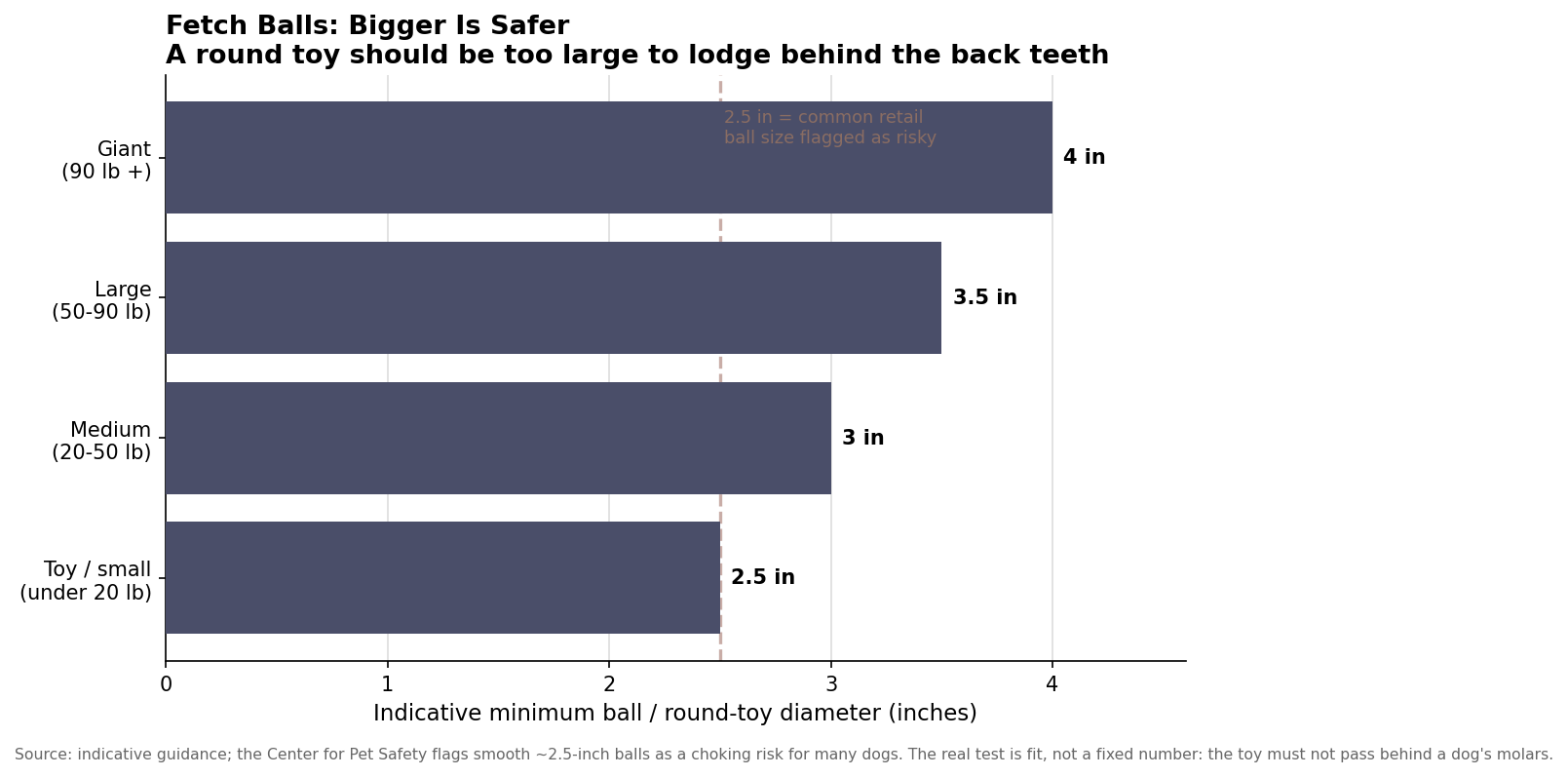
The most dangerous thing about a toy is often not its chemistry but its size. A ball that a dog can get most of the way into its mouth can slide back and lodge in the throat, and once saliva lubricates a smooth, heavy ball, it becomes nearly impossible for the dog to expel; safety investigators describe a near-total fatality rate in these incidents. The catch is that the most common ball size on retail shelves, around 2.5 inches across, is small enough to be a genuine hazard for many medium and large dogs.
The rule is not a single magic number, it is fit: a round toy should be too large to pass behind your dog’s back teeth. Size up rather than down, be especially wary of smooth, solid, heavy rubber balls for powerful dogs, and skip any toy with small attached parts like buttons, plastic eyes, or ribbons that can be chewed off and swallowed.
How hard is too hard
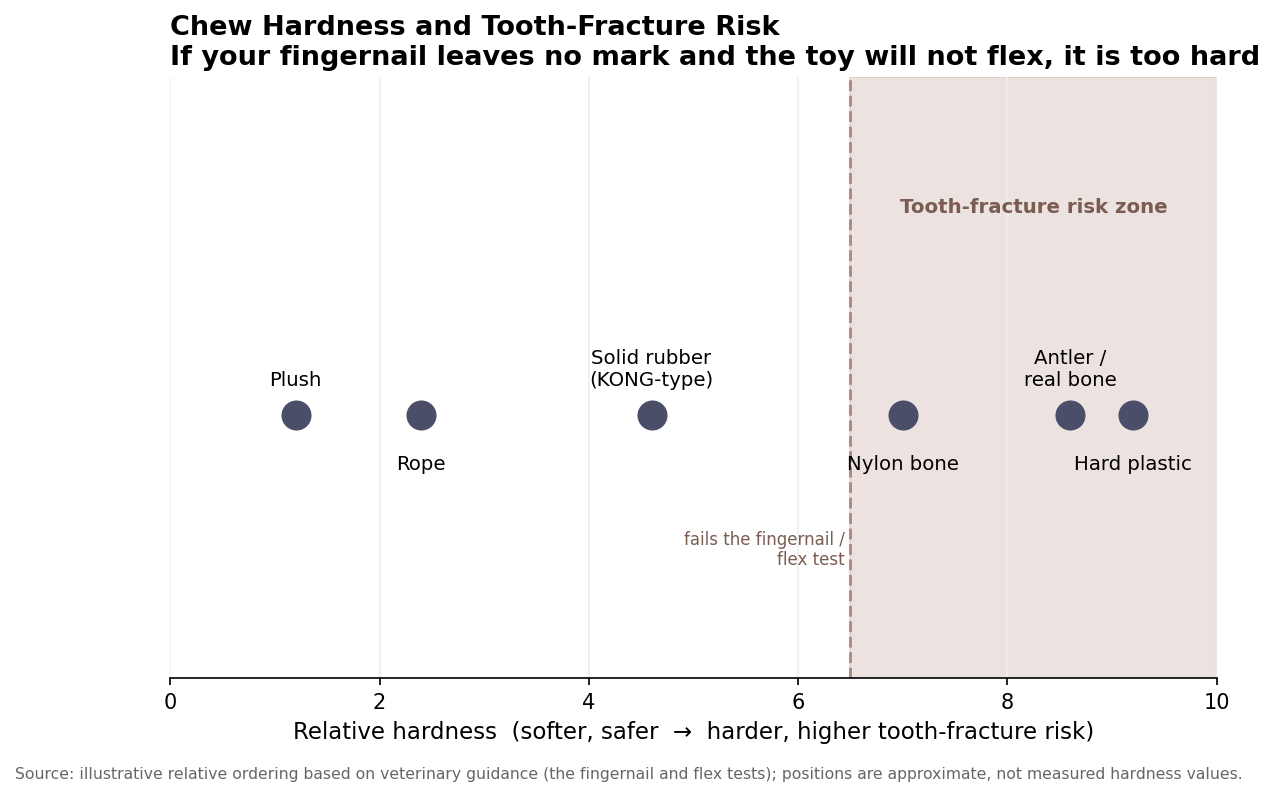
Chews that are too hard crack teeth, and a fractured tooth is a painful, expensive vet visit. The field test veterinarians recommend takes two seconds. Press your fingernail into the toy: if it leaves no mark, and if the toy will not flex at all in your hands, it is too hard for your dog’s teeth. That test quietly rules out most of the hardest items on the market, including antlers, real bones, thick nylon bones, and rigid plastic chews. Softer, forgiving materials such as quality rubber flex under pressure and spread the force instead of concentrating it on a single tooth.
This does not mean giving up on durable chews for a dog that needs to gnaw. It means choosing ones that have some give: firm rubber chews built for aggressive chewers, or dental chews that carry a veterinary acceptance mark, satisfy the urge without the rigidity that shears a tooth. If you do offer something harder for a short, supervised session, watch closely and take it away the moment your dog switches from gnawing with the front of the mouth to bearing down with the back molars, which is where fractures happen.
Squeakers, stuffing, and rope
Some hazards are about what is inside the toy rather than what it is made of. Dogs with a strong prey drive often see the point of a plush toy as the squeaker, and a swallowed squeaker or a mouthful of polyester stuffing can cause an intestinal blockage that needs surgery. Rope toys carry their own risk: as they fray, dogs swallow long strands that can bunch in the gut and cause a dangerous obstruction. None of this means these toys are off-limits, but it does mean they belong to supervised play. Hand them out when you are watching, and put them away when you are not.
Reading a label and knowing when to toss
Put together, a safe toy is one you have vetted on four fronts: the material is non-toxic and clearly labeled, the size is too big to swallow, the hardness passes the fingernail-and-flex test, and there are no small parts or loose fill waiting to come off. Match that to your specific dog, because a toy that is perfect for a gentle senior can be genuinely unsafe for a young power chewer.
The last habit is the one people skip: retire toys before they fail. Throw a toy away once it is cracked, once pieces are breaking off, once the stuffing or squeaker is exposed, or once a ball has been chewed down small enough to swallow. A worn-out favorite feels harmless, but that is exactly the toy that turns into an emergency. In a market with no safety net behind it, a two-minute inspection before and after play is the closest thing your dog has to a regulator, and it is the cheapest insurance you can buy.
Win Free Stuff
Enter below for a chance to win plus receive 10% off your first order.
🎉 You are in!
Check your email for your 10% off code. Good luck!